Does Regular Hemp Oil Contain CBD? Hemp Oil vs. CBD Oil
Hemp seed oil and CBD oil are not the same. Learn which one has CBD, the label terms that confuse buyers, and how to check a COA.
- Evidence
- Strong
- Sources
- 8 linked
- Sponsored
- No ✓
- Checked
- Nov 2026
Regular hemp seed oil has little or no CBD. The FDA says hemp seeds don't naturally contain CBD or THC, only trace amounts picked up during processing. CBD oil is made from a plant extract instead.
Regular hemp seed oil contains little or no CBD. According to the FDA, hemp seeds do not naturally contain CBD or THC, and hemp seed oil has only trace amounts picked up during harvesting and processing. CBD oil is different: it is made from an extract of the hemp plant, mainly its flowers, and is sold for its CBD content. The confusing part is that both are often labeled “hemp oil.”
- Hemp seed oil is pressed from hemp seeds. The FDA says the seeds do not naturally contain CBD or THC.
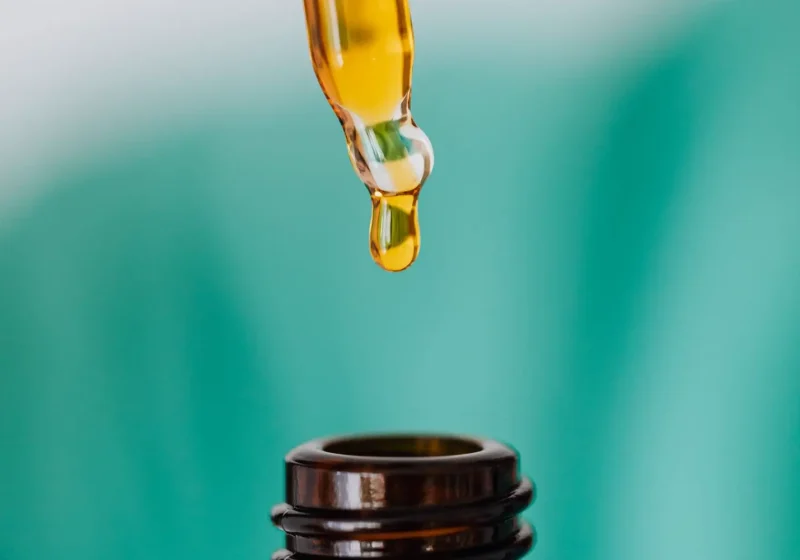
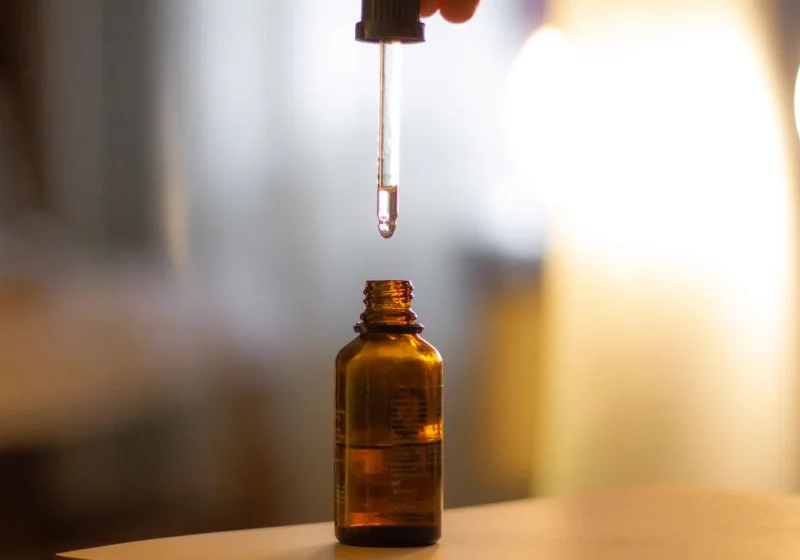
- CBD oil is a cannabinoid extract, usually mixed into a carrier oil, with the CBD amount listed in mg.
- “Hemp oil,” “hemp extract,” and “mg of hemp” can mean very different things. Look for “cannabidiol” or “CBD” with an mg amount.
- Hemp seed oil is a food oil that is mostly polyunsaturated fat, based on product labels in USDA’s FoodData Central.
- A certificate of analysis (COA) from a third-party lab is the clearest way to see how much CBD a product really has.
What’s the difference between hemp seed oil and CBD oil?
Both come from the same plant species, but from different parts and for different purposes. Hemp seed oil is pressed from the seeds, much like sunflower or flaxseed oil. It is sold as a cooking oil, salad oil, or skin-care ingredient.
CBD oil starts with an extract of the plant itself. A 2021 review in Frontiers in Plant Science explains that cannabinoids are produced mainly in tiny resin glands, called trichomes, on the female flowers. Cannabinoids are natural compounds in cannabis; CBD (cannabidiol) and THC (tetrahydrocannabinol, the compound that causes a high) are the best known. The extract is then mixed into a carrier oil, which is sometimes hemp seed oil itself. You can read more about that process in how CBD oil is made.
| Hemp seed oil | CBD oil | |
|---|---|---|
| Made from | Pressed hemp seeds | Extract of the hemp plant (mainly flowers) in a carrier oil |
| CBD content | Trace amounts only (FDA) | Listed on the label in mg (accuracy varies) |
| Typical use | Food, cooking, skin care | Taken by dropper, often under the tongue |
| How it’s regulated | FDA has accepted hemp seed oil as a food ingredient (GRAS notice) | Not FDA-approved; FDA says CBD cannot legally be added to food or sold as a dietary supplement |
| Key label words | “Hemp seed oil,” “Cannabis sativa seed oil” | “Cannabidiol,” “CBD,” “full spectrum,” “broad spectrum,” “isolate“ |
Does regular hemp oil contain any CBD?
Only in trace amounts. In 2018, the FDA responded to safety notices for three hemp seed ingredients: hulled hemp seed, hemp seed protein powder, and hemp seed oil. The agency said hemp seeds do not naturally contain THC, and that these ingredients have only trace amounts of THC and CBD, which the seeds can pick up from other parts of the plant during harvesting and processing.
The FDA concluded these hemp seed ingredients can be legally marketed in human foods for the uses described, as long as they meet other requirements. That is why you can find hemp seed oil in grocery stores. The same FDA page notes these decisions do not change the agency’s position that adding CBD or THC to food is not allowed.
So if you buy a bottle of hemp seed oil hoping to get CBD, you are very likely getting a food oil with little to no CBD. If you are concerned about THC for a drug test, our guide on CBD and drug tests covers that separately.
Which label terms are confusing?
Hemp and CBD laws vary by state and are changing, and labeling is not always consistent. These are the phrases that cause the most mix-ups:
- “Hemp oil.” Can mean either hemp seed oil or a CBD extract. On its own, it tells you very little.
- “Hemp seed oil” or “Cannabis sativa seed oil.” This is the seed oil. If it is the only hemp ingredient, expect trace CBD at most.
- “Hemp extract” or “hemp oil extract.” Often used for CBD-containing extracts, but the term is not a guarantee of how much CBD is present.
- “Mg of hemp” or “mg of hemp extract.” This is the weight of the extract or oil, not the amount of CBD. A product could list a large “hemp” number and contain much less CBD.
- “Cannabidiol” or “CBD” with an mg amount. This is the number that tells you how much CBD the maker claims is in the bottle.
Tip: If a product’s front label says “hemp” but never says “CBD” or “cannabidiol,” and the ingredient list shows only hemp seed oil, treat it as a seed oil, not a CBD product. Then check the lab report to be sure.
What nutrients are in hemp seed oil?
Hemp seed oil is a fat, so its calories come almost entirely from fat. USDA’s FoodData Central database does not have a standard reference entry for hemp seed oil, but it includes label data submitted by manufacturers. One cold-pressed hemp seed oil listed there reports, per 1 tablespoon (15 g), 120 calories, 13 g of fat, and 1 g of saturated fat. Per 100 g, its label data work out to about 66.7 g polyunsaturated, 13.3 g monounsaturated, and 6.7 g saturated fat. Other brands will vary.
FoodData Central’s standard reference entry for hulled hemp seeds (FDC ID 170148) gives a fuller picture of the seed the oil comes from. Per 100 g, it lists:
| Nutrient (per 100 g hulled hemp seeds) | Amount |
|---|---|
| Energy | 553 kcal |
| Protein | 31.6 g |
| Total fat | 48.8 g |
| Polyunsaturated fat | 38.1 g |
| Linoleic acid (omega-6, 18:2 n-6) | 27.4 g |
| Alpha-linolenic acid (omega-3, ALA) | 8.7 g |
| Fiber | 4.0 g |
| Magnesium | 700 mg |
| Iron | 8.0 mg |
The oil is not the whole seed: the hemp seed oil label mentioned above lists 0 g of protein and 0 g of fiber, so the oil does not offer the protein shown in this table. It is a source of fat, including omega-6 and omega-3 fats, and nothing on these labels involves CBD.
How can you tell from the ingredient list and COA?
The ingredient list tells you what was put in. The certificate of analysis, a lab report that tests what is actually in the product, tells you whether the label is accurate. Use both.
- Read the ingredient list. Look for “cannabidiol,” “CBD,” “hemp extract,” or a spectrum term. If the only hemp ingredient is “hemp seed oil” or “Cannabis sativa seed oil,” it is likely a seed oil product.
- Find the CBD amount. A CBD product should list total CBD in mg for the bottle and ideally per serving. Ignore “mg of hemp” for this purpose.
- Find the COA. Look for a QR code, batch number, or link on the package or the seller’s website.
- Match the batch. Check that the batch or lot number on the COA matches the number on your bottle.
- Check the cannabinoid results. Find the CBD result and compare it to the label. Also check the THC line.
- Check who did the testing. The report should come from an independent lab and include the lab’s name and the test date.
This matters because labels are often wrong. A 2017 study in JAMA tested 84 CBD products bought online. Only about 31% contained an amount of CBD within 10% of the label; about 26% contained less than labeled and about 43% contained more. THC was detected in 18 of the 84. The FDA has also reported that many CBD products it tested did not contain the levels of CBD they claimed.
Important: CBD oil is not FDA-approved, and the FDA warns CBD can cause liver injury, interact with other medicines, and cause sleepiness. The FDA also strongly advises against CBD during pregnancy and breastfeeding (see is CBD safe during pregnancy). Talk to a doctor or pharmacist before trying it, especially if you take medication.
Which one should you choose?
That depends on why you are buying. If you want a food oil with omega-6 and omega-3 fats, hemp seed oil is a grocery item like any other oil. If you are looking for CBD specifically, hemp seed oil will not provide meaningful amounts.
If you do decide to try CBD, learn the basics first in what is CBD, and use the label math in our CBD dosage calculator to understand product strength. We do not recommend brands or products; see our editorial policy for why.
Frequently asked questions
Is hemp oil the same as CBD oil?
Not necessarily. “Hemp oil” may refer to hemp seed oil, which has only trace CBD, or to a CBD extract. Check the ingredient list for “cannabidiol” or “CBD” and an mg amount.
Will hemp seed oil make me fail a drug test?
The FDA says hemp seed ingredients contain only trace amounts of THC. We could not find good data for specific hemp seed oil products and drug tests, so if testing is a concern, check the product’s lab report and talk to your employer or testing program.
Why do some CBD oils list hemp seed oil as an ingredient?
Hemp seed oil is sometimes used as the carrier oil that the CBD extract is mixed into. In that case, the CBD comes from the extract, not the seed oil.
Does “hemp extract” mean the product has CBD?
Often, but not always, and the term does not tell you how much. Look for a specific mg amount of CBD and a matching certificate of analysis.
Is hemp seed oil good for you?
It is a food oil that is mostly polyunsaturated fat, including omega-6 and omega-3 fats. Like any oil, it is calorie-dense, at about 120 calories per tablespoon on one label in USDA’s database.
Sources
- U.S. Food and Drug Administration — FDA Regulation of Cannabis and Cannabis-Derived Products, Including Cannabidiol (CBD)
- U.S. Food and Drug Administration — FDA Responds to Three GRAS Notices for Hemp Seed-Derived Ingredients for Use in Human Food
- USDA FoodData Central — Hemp seed entries (Seeds, hemp seed, hulled, FDC ID 170148; branded hemp seed oil labels)
- U.S. Food and Drug Administration — What You Need to Know (And What We’re Working to Find Out) About Products Containing Cannabis or Cannabis-derived Compounds, Including CBD
- NCCIH (NIH) — Cannabis (Marijuana) and Cannabinoids: What You Need To Know
- JAMA (Bonn-Miller et al., 2017) — Labeling Accuracy of Cannabidiol Extracts Sold Online
- Frontiers in Plant Science (Tanney et al., 2021) — Cannabis Glandular Trichomes: A Cellular Metabolite Factory
- U.S. Food and Drug Administration — What You Should Know About Using Cannabis, Including CBD, When Pregnant or Breastfeeding
 Read nextHow CBD Oil Is Made: Extraction, Refining and TestingHow CBD oil is made, from decarboxylation and CO2, ethanol or hydrocarbon extraction to winterization, carrier oils and…