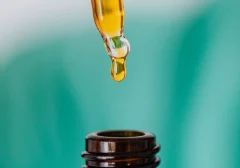
CBD Tincture: How to Use It, Read the Label and Store It
A plain guide to using a CBD tincture under the tongue, working out mg per mL from the label, storing it and checking safety.
- Evidence
- Moderate
- Sources
- 7 linked
- Sponsored
- No ✓
- Checked
- Nov 2026
Measure your amount with the dropper or an oral syringe, place it under your tongue, hold briefly and swallow. Divide total mg by bottle mL to know the strength, and check with a pharmacist if you take medication.
To use a CBD tincture, you measure your chosen amount with the dropper, place it under your tongue, hold it there briefly, then swallow. The harder part is knowing how much CBD is in each dropper, which takes some simple math using the label. CBD tinctures are not FDA-approved, so it is worth checking with a doctor or pharmacist first, especially if you take any medication.
- “Tincture” and “CBD oil” are used almost interchangeably on store shelves. Most products sold as tinctures are CBD in a carrier oil.
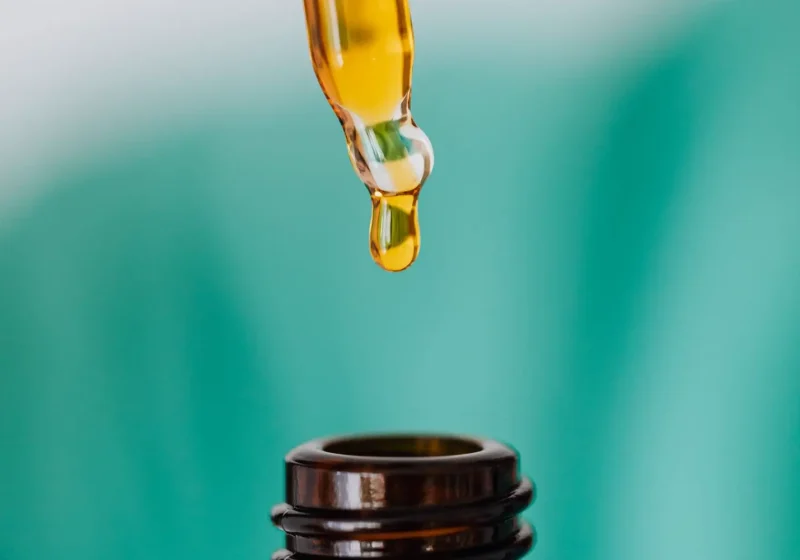
- The usual method is sublingual (under the tongue): measure, hold, then swallow.
- Total mg on the label divided by bottle size in mL gives you mg per mL. Our CBD dosage calculator does this for you.
- Studies of under-the-tongue CBD found peak blood levels at roughly 1 to 4 hours, but the research is small and mostly used sprays, not drops.
- Store the bottle sealed and away from heat. A lab study found CBD in oil broke down much faster when warm and exposed to air.
- The FDA warns CBD can cause liver injury and can interact with other medicines.
Is a CBD tincture the same as CBD oil?
In everyday shopping, mostly yes. Historically, a “tincture” meant a plant extract made with alcohol. Today many brands use “tincture” for any liquid CBD product sold in a dropper bottle, including ones made with a carrier oil such as MCT (coconut-derived) oil or hemp seed oil.
The two can even overlap: the FDA-approved CBD medicine Epidiolex lists both sesame seed oil and dehydrated alcohol among its inactive ingredients. The label is what tells you what is actually inside. Look at the ingredient list for the carrier (oil, alcohol, or glycerin) and check how the CBD is described. “Full spectrum” means the extract keeps other compounds from the hemp plant, which can include small amounts of THC (the compound that causes a high). “Broad spectrum” usually means most THC has been removed, and “isolate” means purified CBD. If you want to know more about the last type, see our guide to CBD isolate.
One thing a tincture is not: a bottle of plain hemp seed oil. Hemp seed oil is a cooking oil that contains only trace amounts of CBD. We explain how to tell them apart in hemp oil vs. CBD oil.
How do you take a CBD tincture under the tongue?
Sublingual means “under the tongue.” The idea is that some CBD may be absorbed through the lining of the mouth, and the rest is swallowed. Research comparing this to simply swallowing is limited, so treat this as the standard method rather than a proven advantage.
- Read the label first. Find the total CBD (in mg), the bottle size (in mL), and any serving size the maker lists.
- Shake the bottle if the label says to. Many products include a “shake well” direction; follow your product’s instructions.
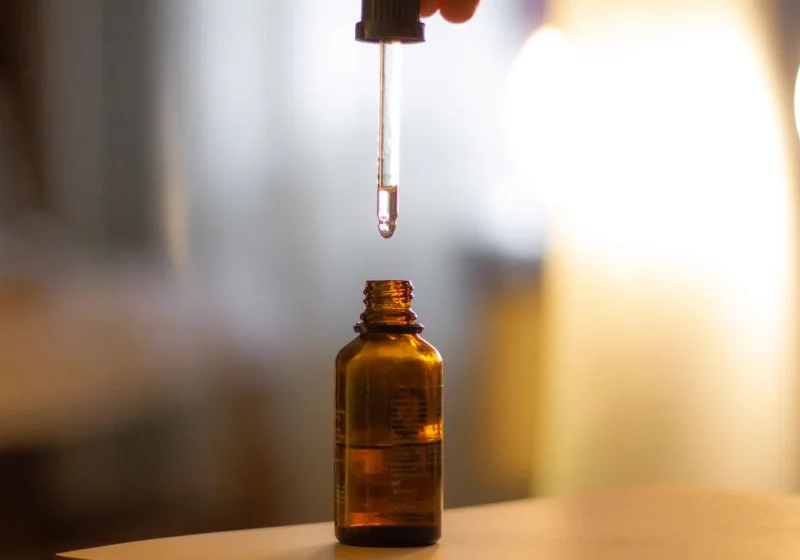
- Measure your amount. Use the markings on the dropper, or an oral syringe for more accuracy. Do not guess with a kitchen spoon.
- Place it under your tongue. Squeeze the liquid gently into the space under your tongue without touching the dropper to your mouth, which keeps the bottle cleaner.
- Hold, then swallow. Many labels suggest holding the liquid for a short time before swallowing. There is no well-studied ideal hold time.
- Write it down. Note the amount, the time, whether you ate, and how you felt. This helps you and your clinician spot patterns or side effects.
How do you read the strength on a tincture label?
CBD labels usually list the total CBD in the whole bottle, not per drop. To find out how much is in each milliliter (mL), divide the total mg by the bottle volume in mL.
| Label says | Bottle size | Math | CBD per mL |
|---|---|---|---|
| 500 mg CBD | 30 mL | 500 ÷ 30 | about 16.7 mg/mL |
| 1,000 mg CBD | 30 mL | 1,000 ÷ 30 | about 33.3 mg/mL |
| 1,500 mg CBD | 30 mL | 1,500 ÷ 30 | 50 mg/mL |
| 1,000 mg CBD | 60 mL | 1,000 ÷ 60 | about 16.7 mg/mL |
This is plain arithmetic, not a dosing suggestion. Watch out for labels that list “mg of hemp extract” or “mg of hemp” instead of “mg of CBD.” Those numbers are not the same thing. To convert mg into drops or mL for your own bottle, use our free CBD dosage calculator, or read our step-by-step guide on how many drops of CBD oil to take.
Also keep in mind that the label itself may be off. A 2017 study in JAMA tested 84 CBD products sold online and found only about 31% contained an amount of CBD within 10% of the label. THC was detected in 18 of the 84 samples. Checking a product’s certificate of analysis (COA), a lab report from a third-party lab, is the best way to confirm what is in the bottle.
Tip: The FDA-approved CBD medicine Epidiolex comes with calibrated oral syringes, and its label says a household teaspoon or tablespoon is not an adequate measuring device. The same logic applies to over-the-counter tinctures: an inexpensive oral syringe from a pharmacy measures more consistently than counting drops.
How long does a CBD tincture take to work?
Honest answer: research is limited. A 2018 systematic review of CBD pharmacokinetics (how the body absorbs and clears a drug) found that for oromucosal products (sprays or drops used in the mouth), peak blood levels were mostly reached within about 1 to 4 hours. Two groups given sublingual drops reached peak levels at about 1.7 and 2.2 hours.
These studies were small, often used sprays that combined CBD and THC, and mostly included men. The review’s authors described the data as sparse and varied. Peak blood level is also not the same as feeling an effect, so no study we found can tell you exactly when you will “feel it.”
Food matters too. In the review, one study found that taking an oromucosal spray after eating raised CBD exposure several times over compared with fasting. The Epidiolex label reports that a high-fat, high-calorie meal increased peak CBD levels about five-fold and total exposure about four-fold, and it advises taking the drug consistently with respect to meals. For tinctures, that suggests keeping your routine similar from day to day. How long CBD stays around afterward is covered in how long CBD stays in your system.
How should you store a CBD tincture?
Keep the cap tightly closed and store the bottle somewhere cool and out of direct sunlight, unless the label says otherwise. A 2021 study in Pharmaceutics stored CBD dissolved in sunflower oil under controlled conditions. At room temperature (25°C), CBD stayed stable for at least 180 days, but about 42% was lost after a year.
Heat and air made things much worse. In warm, humid conditions (40°C), CBD in open vials dropped by about 20% within 90 days, and the oil darkened and thickened. Light alone caused little loss at room temperature in that study, but it may speed up breakdown when combined with heat and air.
For comparison, the Epidiolex label says to store that product upright at room temperature, not to freeze it, and to discard any remainder 12 weeks after first opening. Over-the-counter products vary, so follow the expiration date and storage directions on your bottle.
Important: The FDA warns that CBD can cause liver injury and can affect how other drugs you take work, potentially causing serious side effects. It can also cause sleepiness, especially with alcohol or other sedating drugs. Talk to a doctor or pharmacist before using a CBD tincture if you take any medication, have liver problems, or are pregnant or breastfeeding.
What are the safety risks and drug interactions?
The FDA has approved only one CBD drug, Epidiolex, a prescription medicine for seizures linked to Lennox-Gastaut syndrome, Dravet syndrome, or tuberous sclerosis complex. Over-the-counter tinctures have not been evaluated by the FDA for safety, effectiveness, or proper dosage.
The FDA and the National Center for Complementary and Integrative Health (NCCIH) list these possible concerns:
- Liver injury. The FDA says the risk is higher with other drugs that affect the liver, though it was also seen in people not taking them.
- Drug interactions. CBD can change how other medicines work. The Epidiolex label, for example, notes that it raises levels of a metabolite of the seizure drug clobazam.
- Sleepiness and reduced alertness. The Epidiolex label advises against driving until people know how the drug affects them.
- Stomach effects. Diarrhea and decreased appetite are the most common, according to the FDA.
- Mood changes, such as irritability and agitation.
- Male reproductive effects seen in animal studies, whose meaning for humans is unclear.
Full-spectrum tinctures may also contain THC, which could matter for drug testing. Our guide to CBD and drug tests explains why. For how we choose and check sources, see our editorial policy.
Frequently asked questions
Can I just swallow a CBD tincture instead of holding it under my tongue?
You can. Holding it under the tongue is the usual direction on labels, but studies directly comparing sublingual and swallowed CBD are few and small. A 2018 review found one comparison where exposure was similar, but the authors cautioned that the data are limited.
Can I add a CBD tincture to food or drinks?
Some people do. Keep in mind that food can change how much CBD the body absorbs: the Epidiolex label reports much higher CBD levels after a high-fat meal. Keeping your routine consistent makes it easier to notice effects and side effects.
What does “mg” on the bottle mean?
It usually means the total milligrams of CBD in the whole bottle. Divide it by the bottle size in mL to get mg per mL. If the label says “mg of hemp extract” instead, that number may include more than CBD, so check the lab report.
Do CBD tinctures expire?
Yes. Lab testing shows CBD in oil slowly breaks down over time, faster with heat and air exposure. Follow the expiration date, keep the cap tight, and discard products that have changed in smell, color, or thickness.
Is it safe to use a CBD tincture with my medication?
It may not be. The FDA warns that CBD can affect how other drugs work. Ask your pharmacist or doctor to check your specific medicines before you start.
Sources
- U.S. Food and Drug Administration — What You Need to Know (And What We’re Working to Find Out) About Products Containing Cannabis or Cannabis-derived Compounds, Including CBD
- U.S. Food and Drug Administration — FDA Regulation of Cannabis and Cannabis-Derived Products, Including Cannabidiol (CBD)
- NCCIH (NIH) — Cannabis (Marijuana) and Cannabinoids: What You Need To Know
- DailyMed (NLM) — EPIDIOLEX (cannabidiol) oral solution prescribing information
- Frontiers in Pharmacology (Millar et al., 2018) — A Systematic Review on the Pharmacokinetics of Cannabidiol in Humans
- Pharmaceutics (Kosović et al., 2021) — Stability Study of Cannabidiol in the Form of Solid Powder and Sunflower Oil Solution
- JAMA (Bonn-Miller et al., 2017) — Labeling Accuracy of Cannabidiol Extracts Sold Online
 Read nextDoes Regular Hemp Oil Contain CBD? Hemp Oil vs. CBD OilHemp seed oil and CBD oil are not the same. Learn which one has CBD, the label terms…