What Is CBD Isolate Good For? Uses, Evidence and Drug Tests
CBD isolate is more than 95% pure CBD with THC removed. Here is how it is made, how it compares with full spectrum, and what the evidence shows.
- Evidence
- Limited
- Sources
- 9 linked
- Sponsored
- No ✓
- Checked
- Nov 2026
CBD isolate is usually over 95% pure CBD with no THC. It mainly suits people avoiding THC; purified CBD is proven for certain seizures, but other uses have limited evidence.
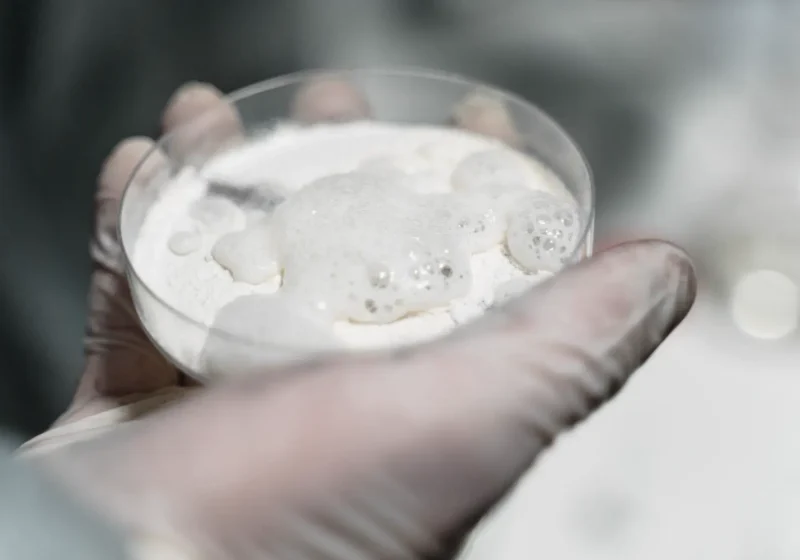
CBD isolate is CBD in its purest form: a crystalline solid that is typically more than 95% cannabidiol, with the THC and other plant compounds removed. People choose it mainly to avoid THC, or to get a product that is almost entirely CBD. The only use with strong evidence is the prescription drug Epidiolex, a purified CBD; for everyday uses like sleep or stress, research is still limited.
- CBD isolate is usually defined as more than 95% pure CBD, made by extracting hemp and then purifying and crystallizing the CBD.
- Unlike full-spectrum products, isolate should contain no THC, which makes it the lowest-risk option for drug tests, though not zero-risk.
- In one 2024 lab study, only 57% of products sold as “isolate” actually met that definition.
- Epidiolex, an FDA-approved purified CBD medicine, shows purified CBD can reduce certain seizures. Most other claimed benefits are unproven.
- Isolate carries the same safety warnings as any CBD, including possible liver effects and drug interactions.
What is CBD isolate?
CBD (cannabidiol) is one of the cannabinoids, the natural compounds made by the cannabis plant. If you are new to CBD, start with our guide on what CBD is. An isolate is CBD separated from everything else in the plant, including THC (the compound behind a marijuana high), other cannabinoids, terpenes (aroma compounds) and plant waxes.
There is no official federal definition. A 2024 study in Frontiers in Pharmacology used a common working standard: a CBD isolate contains more than 95% CBD. In finished products, isolate powder is usually dissolved into a carrier oil, pressed into gummies or mixed into creams.
How is CBD isolate made?
Isolate starts the same way as other CBD extracts, then goes through extra purification. A 2025 paper in ACS Agricultural Science & Technology described one scaled-up process in detail:
- Decarboxylation. Hemp is gently heated so its raw acid form, CBDA, converts into CBD.
- Extraction. Supercritical CO2 pulled cannabinoids out of the plant. This step also concentrated THC, because CO2 is not selective.
- Winterization. The extract was dissolved in a solvent and chilled to separate out waxes and fats.
- Purification. Filtration and chromatography raised CBD content above 80%.
- Crystallization. When cooled, pure CBD formed crystals while THC stayed behind in the leftover liquid. Final purity was above 99%, with THC below 0.2%.
Commercial manufacturers use a range of methods, but crystallization is the key step that separates CBD from THC. For the full process, see how CBD oil is made.
How does isolate compare with full and broad spectrum?
The 2024 Frontiers in Pharmacology study defined the three common product types like this:
| Type | What it contains | THC | Share meeting its label type (2024 study) |
|---|---|---|---|
| Full spectrum | Hemp extract with no compounds removed: CBD, THC and other cannabinoids | Yes, small amounts | 67% |
| Broad spectrum | CBD plus other cannabinoids | Removed to non-detectable | 68% |
| Isolate | More than 95% CBD | Should be none | 57% |
Full-spectrum fans often point to the “entourage effect,” the idea that plant compounds work better together. A 2023 scoping review in Biomedicines found “a lack of sound evidence” supporting it. So there is no solid reason to assume isolate is weaker, or that full spectrum is better.
The same 2024 study found full-spectrum products averaged about twice as many pesticide detections per product as isolates (0.34 vs 0.16).
Is CBD isolate better if you get drug tested?
Workplace drug tests look for a THC breakdown product (THC-COOH), not CBD. That is why isolate is popular with people who are tested. A 2020 study in the Journal of Analytical Toxicology gave healthy adults 100 mg of pure CBD by mouth or by vaping. Only 1 of 218 urine samples screened positive at the 20 ng/mL screening cutoff, and none exceeded the 15 ng/mL confirmation cutoff. The authors concluded a single dose of pure CBD should not cause a positive test under federal workplace guidelines.
Products containing THC are different. In a 2020 open-label trial reported in JAMA Psychiatry, 7 of 14 people taking a full-spectrum, high-CBD oil three times a day for four weeks tested positive for THC. The product contained just 0.23 mg/mL of THC.
Important: “Isolate” on a label does not guarantee zero THC. Products are often mislabeled: in the 2024 study, three broad-spectrum products contained THC. If a failed test would cost you your job or license, no CBD product is fully risk-free. Read more in does CBD show up on a drug test?
What is CBD isolate good for?
The honest answer: we know purified CBD works for a few rare seizure disorders, and we know much less about everything else.
- Seizures (strong evidence): Epidiolex is a purified CBD oral solution approved by the FDA for seizures linked to Lennox-Gastaut syndrome, Dravet syndrome and tuberous sclerosis complex, in patients 1 year and older. It is a prescription drug, made to pharmaceutical standards, and taken under medical supervision. Store-bought isolate is not a substitute.
- Anxiety (limited evidence): NCCIH notes one small study of 24 people found less anxiety with CBD than placebo during a simulated public speaking test.
- Sleep, pain and other uses (limited or uncertain): NCCIH says evidence for sleep, PTSD and many other conditions is uncertain or limited.
The main practical reason people pick isolate is avoiding THC, and because nearly all of the extract is CBD, it is simple to track milligrams.
How is CBD isolate used?
Most people never handle isolate powder directly. It is usually sold already dissolved in an oil, pressed into gummies, or mixed into topicals. Because CBD dissolves in fat, oil-based products are common; the prescription purified-CBD drug Epidiolex, for example, uses sesame seed oil and alcohol as its base.
Food can change how much CBD your body absorbs. The Epidiolex label reports that taking it with a high-fat, high-calorie meal raised overall CBD exposure about fourfold compared with an empty stomach, and it recommends taking doses consistently with respect to meals. For tips on oils and drops, see how to use a CBD tincture.
Is CBD isolate safe?
Purity does not remove CBD’s own risks. The FDA warns that CBD can cause liver injury, can interact with other medicines, and may cause drowsiness, diarrhea, decreased appetite and mood changes. Male reproductive toxicity has been seen in animal studies. The Epidiolex label requires liver blood tests before and during treatment, a reminder that CBD’s liver effects are taken seriously even in a purified drug.
The FDA also notes that the effects of CBD during pregnancy and breastfeeding are unknown, and it advises discussing any CBD use with a healthcare provider.
Tip: Ask for the batch’s certificate of analysis (COA), a lab report showing what is in the product. For an isolate, look for high CBD, THC listed as “ND” (not detected), and clean results for heavy metals, pesticides and residual solvents. Then use our CBD dosage calculator to work out milligrams per serving.
Frequently asked questions
Does CBD isolate get you high?
No. Pure CBD is not intoxicating; the World Health Organization’s drug dependence committee found it has no potential for abuse or dependence. See does CBD get you high?
Is CBD isolate weaker than full spectrum?
Not necessarily. Strength depends on how many milligrams of CBD you take. The idea that other plant compounds boost CBD (the entourage effect) lacks strong evidence.
Is Epidiolex just CBD isolate?
Epidiolex contains purified CBD, but it is a regulated prescription drug made under FDA manufacturing standards, with a set formula and dose. Retail isolate products are not FDA-approved.
Can CBD isolate still contain THC?
It should not, but mislabeling is common. Check a batch-specific COA.
What does CBD isolate look like?
On its own, it forms crystals. Most people use it already dissolved in an oil or mixed into a gummy or cream.
Sources
- Frontiers in Pharmacology (via PMC) — Gidal et al., Product Labeling Accuracy and Contamination Analysis of Commercially Available CBD Products (2024)
- ACS Agricultural Science & Technology (via PMC) — Calmanti et al., From Hemp to CBD Crystals (2025)
- Journal of Analytical Toxicology (via RTI) — Spindle et al., Urinary Pharmacokinetic Profile of Cannabinoids Following Vaporized and Oral CBD (2020)
- Quest Diagnostics — Full-spectrum CBD may trigger positive THC result (summary of Dahlgren et al., JAMA Psychiatry)
- Biomedicines (via PMC) — Christensen et al., Decoding the Postulated Entourage Effect of Medicinal Cannabis (2023)
- DailyMed (NLM) — Epidiolex (cannabidiol) prescribing information
- FDA — What You Need to Know About Products Containing Cannabis or Cannabis-Derived Compounds, Including CBD
- NCCIH — Cannabis (Marijuana) and Cannabinoids: What You Need To Know
- World Health Organization — News Briefing, 40th Expert Committee on Drug Dependence
 Read nextDoes CBD Oil Get You High? What Science SaysPure CBD is not intoxicating. Here is why some CBD products still cause a high: hidden THC, mislabeling,…